
Last Updated: October 19, 2026
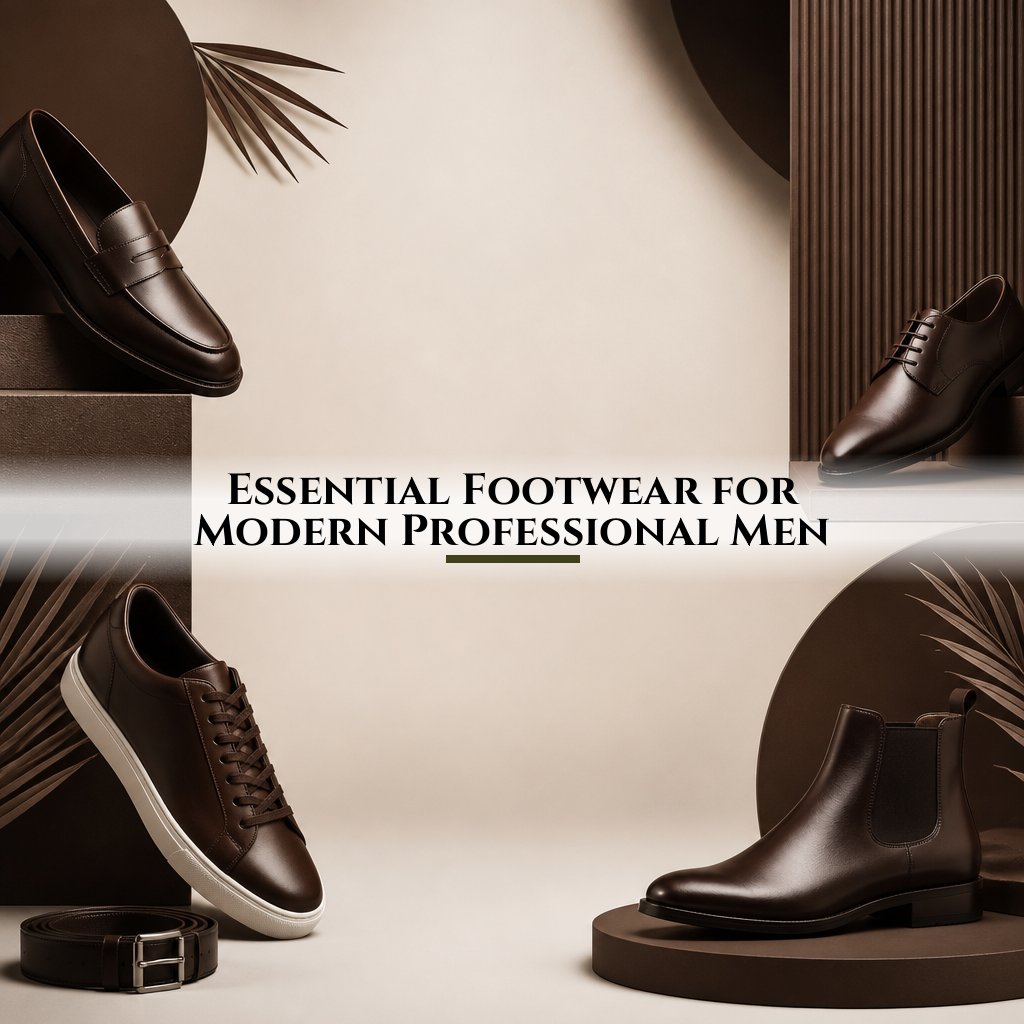
Essential footwear for modern professional men comes down to six pairs that cover nearly every occasion: Oxfords, loafers, Chelsea boots, chukkas, business-casual derbies, and clean sneakers. Get those right and you stop guessing at 7 a.m.
Most wardrobes don’t fail because of bad taste. They fail because of gaps: the interview shoe that doesn’t exist, the wedding shoe borrowed from a brother-in-law.
The six-pair rotation we cover handles formal meetings, client dinners, casual Fridays, and weekend travel. Fewer decisions, better outfits.
Oxford shoes are the foundation of formal and professional dressing: closed lacing, a sleek silhouette, and a shape that works with everything from a navy suit to dark trousers. If your wardrobe has one anchor pair, this is it.
A common mistake is buying Oxfords in a trend shape. Skip the exaggerated toe. Stick with a classic last in black or dark brown full-grain leather, and the pair will serve you for a decade of formal occasions.
The UK’s official business dress guidance and workplace etiquette resources consistently underline how formal dress codes reward restraint. Oxfords are restraint in shoe form.
Loafers and Chelsea boots are the two most adaptable styles a professional man can own. A penny loafer moves from office wear to dinner without a costume change. A Chelsea boot handles autumn commutes, travel days, and smart-casual outfits in one sleek silhouette.
The trick nobody tells you: buy both in suede if you live somewhere dry, leather if you don’t. Suede reads more relaxed and pairs naturally with business casual. Leather survives weather and takes a polish.
Vogue’s menswear coverage of timeless shoe styles has long argued that slip-on shoes carry more style range than lace-ups. In practice, that means one loafer and one Chelsea boot can replace three lace-up pairs.
The best business casual shoes for men sit between a suit shoe and a sneaker: derbies, loafers, and chukka boots in brown, tan, or suede. But the real skill isn’t naming the styles, it’s knowing which one to reach for on a given morning. Most style lists stop at the category. This section gives you the decision mechanics.
Start with the trouser. The shoe should follow the fabric, not fight it:
Derbies deserve more attention than they get. A brown derby with chinos and a knit polo is the uniform of the well-dressed modern professional, and it survives a full office day better than a loafer on a wider foot. Chukkas do similar work: two or three eyelets, suede or leather, and a shape that reads relaxed without looking sloppy.
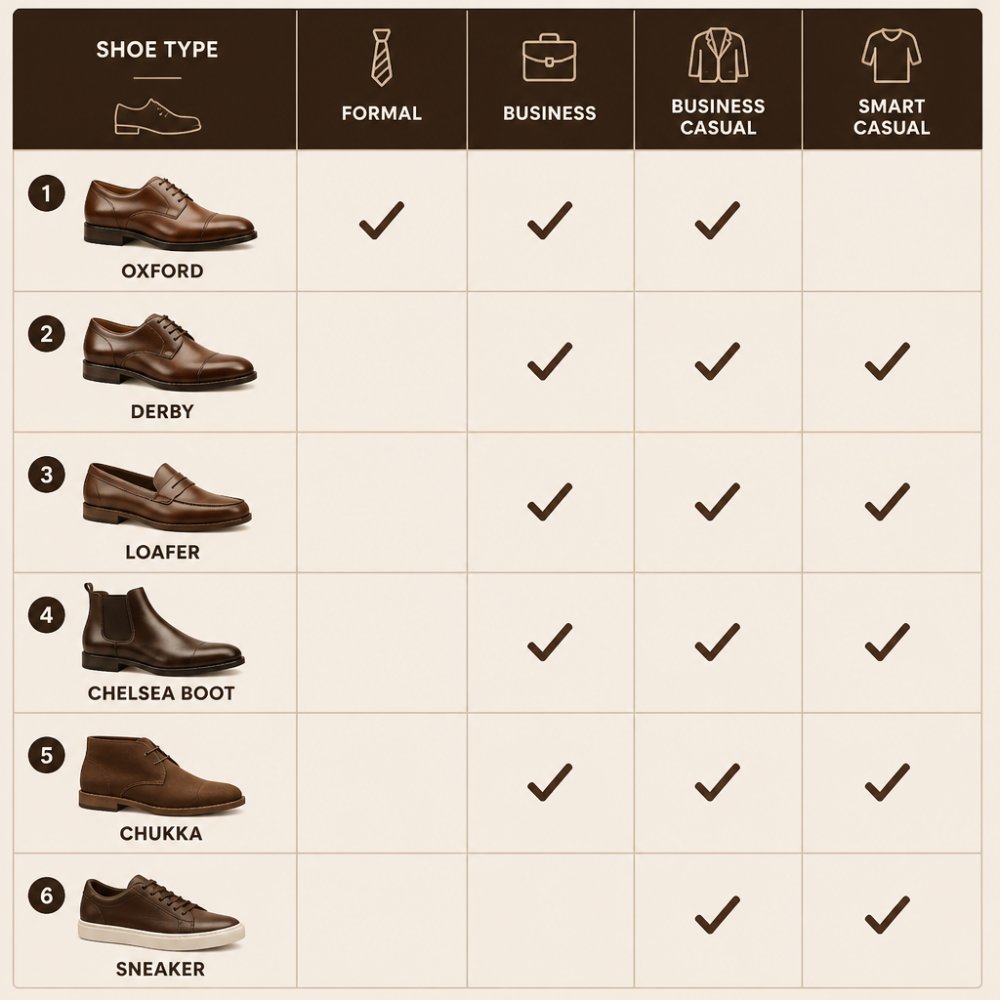
| Style | Formality | Best Pairing | Occasion |
|---|---|---|---|
| Oxford | High | Suit, dark trousers | Formal, interviews |
| Derby | Medium-high | Chinos, blazer | Business, office wear |
| Loafer | Medium | Trousers, smart jeans | Business casual, dinners |
| Chelsea boot | Medium | Dark jeans, wool trousers | Smart casual, travel |
| Chukka | Medium-low | Chinos, casual outfits | Casual Fridays, weekends |
| Sneaker | Low | Tailored casual, denim | Creative offices, off-duty |
A practical rule most guides skip: match the shoe’s shine to the outfit’s texture. Polished leather with a worsted wool suit; brushed or suede with cotton and knit. A high-shine shoe against chinos looks like you borrowed the wrong half of an outfit.
Professional men’s sneakers work when three rules hold: minimal design, clean materials, and a silhouette that doesn’t shout. A white leather low-top or a monochrome runner in premium leather earns its place. Neon running shoes do not.
Our curated collection focuses on premium sneaker brands chosen for exactly this use case, and our styling guides show you how to pair them with tailoring rather than against it. If you’re 52 and not naturally a sneaker person, the guides are written for you, not for a 22-year-old streetwear fan.
The insider move is treating sneakers as a rotation member, not a default. Wear them two days a week, not five.
Men’s office shoes last longer when you rotate, rest, and care for them properly, but the bigger win is buying the right fit in the first place. This is the section most style guides skip, and it’s where your money is actually saved or wasted.
Fit matters more than brand. Run these checks before you buy:
Width matters as much as length. Many men buy a half-size up to solve a width problem, which creates a length problem. If a brand offers a wide fitting, try it before sizing up. Leather stretches slightly, not enough to fix a bad fit.
The Foot Health Foundation’s guidance on footwear fit makes the same point from a health angle: correct fit prevents long-term problems, not just discomfort.
Most good leather shoes need a short break-in, a few short wears around the house or on carpet before a full day. Expect the leather to soften across the vamp and the heel counter to mould to your ankle. What you should not accept: pinching across the top of the foot, numbness in the toes, or a heel that rubs raw. Those are fit problems, not break-in problems.
Chelsea boots and loafers with elastic gussets need the same patience. Thin socks for two evenings at home let the gusset and leather settle before you wear them outdoors.
Three simple habits add years to any pair: shoe trees after every wear, a 24-hour rest between wears, and a brush-and-condition routine every few weeks.
Sticker price tells you what you paid. Cost per wear tells you what the shoe costs you. A well-made pair worn twice a week for several years costs far less per outing than a cheap pair replaced annually. Spend on the formal pairs first, since they take the most punishment from occasional heavy use, and treat repair as maintenance rather than failure. A resole is almost always cheaper than a replacement.
A timeless capsule wardrobe starts with six pairs chosen for coverage, not quantity.
Here’s the practical sequence we recommend:
Buy in that order. Each pair fills a gap the previous ones leave open, and you never end up with three brown shoes that do the same job.
Budget matters too.
Climate and commute shape the last decisions. Wet cities call for leather over suede and a rubber sole. Long walks to the station reward a slightly thicker sole and proper arch support.
Building a rotation takes time, and the gaps are most obvious when you’re standing in front of your wardrobe at 7 a.m. with nothing that fits the day.
violeno.com offers a curated collection of premium footwear, rigorous product testing, and expert styling guides that show you how each pair slots into your existing wardrobe.
Get started with violeno.com and build the rotation that ends the daily shoe decision for good.
Six pairs cover nearly every situation: a black Oxford for formal occasions, a brown derby or brogue for business wear, a loafer for smart-casual days, a Chelsea boot for autumn and winter, a chukka or dress boot for weekend polish, and a clean leather sneaker for creative offices. Choose full-grain leather where possible, since it ages better than corrected grain and can be resoled. Rotate pairs daily and use shoe trees so each pair recovers between wears. That rotation is the core of essential footwear for professional men.
It depends on the dress code. In creative, tech, and smart-casual workplaces, minimal leather sneakers in white, black, or navy pass easily when paired with tailored trousers and a knit polo or unstructured blazer. In traditional business or formal settings, keep sneakers for casual Friday and commuting, and switch to loafers or Oxfords at your desk. Avoid running shoes, chunky soles, and loud logos. A sleek silhouette and clean condition matter more than the brand.
Three to four work pairs is a practical minimum: one formal pair, one business-casual pair, one loafer or slip-on, and one professional sneaker if your office allows it. Rotating between pairs lets leather dry out fully, which extends lifespan significantly compared with wearing the same pair daily. If you commute on foot or by bike, add a weather-resistant pair for the journey. Quality beats quantity: two well-made pairs outperform five cheap ones over time.
Yes, with the right style. A penny loafer or horsebit loafer in black or dark brown leather reads as professional in business-casual and most modern offices, especially with tailored trousers. Avoid suede loafers with thin soles or casual driver styles for formal meetings. Fit matters too: loafers should hold your heel without slipping, so try them with the socks you plan to wear. Paired well, loafers are among the most versatile men’s office shoes you can own.








Leave a comment