HomeBlogBlogHow to Spot Fake Luxury Sneakers: 2026 Guide

How to Spot Fake Luxury Sneakers: 2026 Guide

Table of Contents

Last Updated: October 5, 2026

How to Spot Fake Luxury Sneakers: Start With the Basics

Learning how to spot fake luxury sneakers starts with one hard truth: no single check proves a shoe is real.

Counterfeits have improved fast, often using real leather and near-perfect logos, so “just look at the logo” no longer works alone.

Below: seven physical checks, a code-verification routine, and a step-by-step online buying workflow, a repeatable process, not a lucky guess.

Why High-Quality Counterfeits Make This Harder in 2026

Today’s fakes aren’t the obvious knockoffs of a decade ago. Many come from the same factories that once made legitimate pairs, using similar materials and machines.

What still gives them away? Small things:

  • Uneven stitching or crooked seams
  • Glue residue along the sole edge
  • Misaligned logos or monograms

These flaws are subtle. You need to know exactly where to look.

Watch Out
Relying on one check is the most common mistake. A fake can pass the smell test and still fail on stitching, codes, or shape. Always run several checks before you decide.

How to Tell If Designer Shoes Are Real: 7 Physical Checks

To know how to tell if designer shoes are real, work through these checks in order, most visible flaws first, then the details needing a closer look.
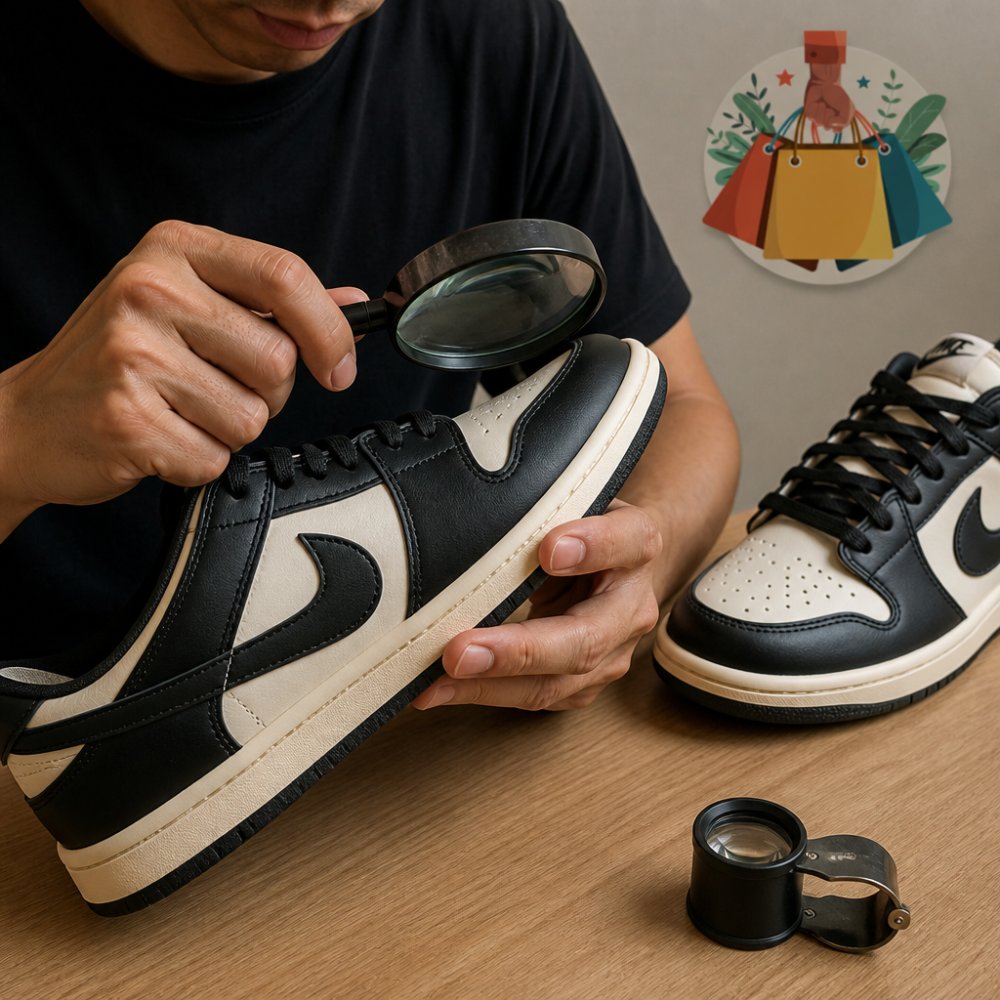
Close-up of hands examining the stitching and seams on a luxury sneaker under bright light, with a magnifying glass and a genuine pair beside it for comparison

Stitching, Seams, and Glue Residue

Stitching is where most fakes slip up. Genuine pairs have even, tight, evenly spaced stitches; fakes often show:

  • Wavy or uneven stitch lines
  • Loose threads poking out
  • Crooked seams where panels meet

Run your finger along every seam. Real craftsmanship feels smooth and consistent.

Logo, Monogram, and Pattern Alignment

Branding is the second big tell. Check logo shape, font, and spacing against official photos; on patterned shoes, the monogram should line up cleanly across panels.

Common red flags:

  • A logo that looks slightly stretched or squashed
  • Letters with the wrong thickness
  • Pattern that breaks awkwardly at a seam

Shape, Silhouette, and Proportions

A genuine sneaker has a balanced silhouette, with toe box, heel, and collar in proportion. Fakes often look just a little “off”:

  • A toe box that’s too tall or too flat
  • A heel that leans oddly
  • A collar that gapes or pinches

Compare side-by-side with official product photos, small differences matter.

Designer Sneaker Authentication Checklist: Codes, Tags, and Packaging

A designer sneaker authentication checklist should always include codes, tags, and packaging, harder for counterfeiters to copy well, making them some of your strongest signals.

SKU, EAN, and Serial Number Verification

Every genuine pair carries a product code, usually a SKU or style number, on the tongue tag, inside the shoe, and often on the box label.

Key check: the code on the shoe must match the code on the box. If they don’t, walk away.

An EAN number (the barcode number) can also be checked, but be careful.

Key Takeaway
SKU, EAN, and QR codes are useful, but they are not proof on their own. Counterfeiters copy real codes onto fake boxes all the time. Treat codes as one signal among many, never as a final verdict.

Size Tags, Tongue Labels, and Product Codes

Look closely at the tongue label and size tag. Genuine labels use crisp printing, correct fonts, and clean spacing. Fakes often show:

  • Blurry or smudged text
  • Wrong font weight
  • Misspelled brand names

Check that the size on the tag matches the size on the box.

Shoe Box, Packaging, and Printed Details

Packaging is easy to overlook but revealing. Genuine boxes use sturdy card, sharp printing, and correct brand colors. Check for:

  • Faded or misaligned printing on the label
  • Flimsy box material
  • Missing or wrong accessories (dust bags, extra laces)

Material Quality, Color, and the Smell Test

Material checks are where your hands and nose do work your eyes can’t, but also where beginners make the most false-positive calls, since legitimate pairs vary too. The goal isn’t a “perfect” shoe; it’s spotting the specific ways counterfeit materials fail.

How Genuine Leather, Suede, and Knit Actually Behave

Genuine luxury sneakers use full-grain or top-grain leather, often from tanneries with recognizable finishes. In practice:

  • Grain is irregular. Real leather has visible pores, subtle creases, and slight variation from panel to panel. Fakes often use a uniform, embossed surface that looks the same everywhere.
  • It creases, not cracks. Press the toe box gently. Real leather forms soft, fine creases that relax. Synthetic or corrected-grain leather forms sharp, white-edged cracks or springs back too stiffly.
  • Suede has a nap. Run your finger against the grain. Genuine suede shifts tone and feels slightly rough; fake suede feels flat, plasticky, or overly fuzzy.

The Smell Test, Explained Properly

The smell test still works, but not for the reason most guides claim. Genuine leather smells earthy from tanning; counterfeits smell like glue or solvent because they rely on adhesives and synthetic coatings.

What to actually smell for:

  • Genuine: warm, slightly sweet, leathery, sometimes faintly chemical from the factory finish, that’s normal.
  • Counterfeit: sharp glue, paint thinner, or a strong “new plastic” odor that doesn’t fade after a day of airing.

A common pattern is that high-quality replicas use real leather but cheap glue, so the smell is a better tell than the surface feel.

Color Accuracy and the Lighting Trap

Color is the easiest check to get wrong, because lighting changes everything. A shoe that looks too yellow under a seller’s warm studio light may match official photos perfectly in daylight.

How to check color properly:

  • Compare against official product photos taken on a neutral background, not influencer shots.
  • Ask for photos in natural daylight, not studio lighting.
  • Check color consistency across panels, fakes often have slight shade shifts where panels meet.

Legitimate Variation vs. Real Red Flags

Not every flaw means fake. Legitimate pairs can show:

SHOP NOW →

  • Minor stitching variation between production runs
  • Slight color differences between seasons or regions
  • Aging that darkens leather or yellows midsoles

What still points to counterfeit:

  • Glue residue creeping past the sole edge on multiple seams
  • Uniform, artificial texture across every panel
  • Color that doesn’t match any official release
Check What’s Normal Red Flag
Leather feel Soft, supple, irregular grain Stiff, plasticky, uniform surface
Creasing Fine, soft creases that relax Sharp cracks or no creasing at all
Smell Earthy leather, faint factory finish Sharp glue or solvent odor that lingers
Color Matches official shade in daylight Too bright, dull, or yellow under neutral light
Texture Visible natural grain or engineered knit zones Uniform, artificial surface across all panels
Key Takeaway
Material checks are strongest when combined. A single stiff panel or one odd smell isn’t proof, but a uniform texture, a lingering chemical odor, and off-color panels together are a strong counterfeit signal.

Model-Specific Material Notes

Generic advice only goes so far. A few examples of how materials differ by model:

  • Air Jordan 1 (leather): Genuine pairs use tumbled leather with visible grain; fakes often use smooth, corrected-grain leather that looks flat.
  • Yeezy Boost 350 (Primeknit): Genuine knit has a distinct stripe pattern with denser side panels; fakes often have a flatter, more uniform weave.
  • Balenciaga Triple S (mixed materials): Genuine pairs combine mesh, nubuck, and leather with clear tonal separation; fakes blur the materials together.

Build a reference file of official photos for the models you buy most. The more genuine pairs you handle, the faster you’ll notice when a material feels wrong.

How to Authenticate Sneakers Online: A Step-by-Step Workflow

Learning how to authenticate sneakers online comes down to a repeatable process. Follow these steps before you pay.

  1. Ask the seller for clear photos of the tongue tag, box label, and sole.
  2. Compare the SKU on the shoe with the SKU on the box.
  3. Check the stitching, logo, and shape against official product photos.
  4. Request a photo of the receipt or proof of purchase.
  5. Review the seller’s reputation and return policy.
  6. If anything feels off, walk away.

What to Ask Sellers and What to Inspect in Photos

Ask direct questions. A genuine seller will answer without hesitation.

  • “Can you send a close-up of the tongue tag and box label?”
  • “Do you have the original receipt?”
  • “What’s your return policy if the item isn’t as described?”

In photos, zoom in on the stitching, logo alignment, and sole edge. Blurry photos are a red flag on their own.

Pro Tip
Ask for photos in natural daylight, not studio lighting. Harsh light hides glue residue and stitching flaws that daylight exposes.

Fake Sneaker Identification App: What They Can and Cannot Do

A fake sneaker identification app can help, but it has limits. These tools compare your photos against a database of known pairs. They’re a useful first filter, not a final answer.

What they do well:

  • Flag obvious mismatches in logo or shape
  • Speed up your initial check

What they miss:

  • High-quality fakes that match the database
  • Flaws that need a physical inspection
  • Codes that have been copied from real pairs

Use an app as one step in your process. Never let it replace your own eyes.

Brand-Specific Red Flags and Authentication Services

Every brand has its own tells, and a generic checklist won’t catch them. This section covers concrete brand-specific red flags, the terminology sellers use to confuse buyers, and what to do when your own checks aren’t enough.

Replica vs. Unauthorized vs. Genuine: What Sellers Actually Mean

Before you buy, understand the words sellers use, they’re often chosen to mislead.

  • Genuine: Made by the brand, sold through authorized channels or by a legitimate reseller with proof of purchase.
  • Replica: A counterfeit. Some sellers use “replica” or “UA” (unauthorized authentic) to imply the shoe came from the same factory as genuine pairs. It did not. “UA” is a marketing term, not a category.
  • Unauthorized pair: A shoe made in a factory that produces for the brand but sold outside the brand’s control. In practice, almost every listing using this term is selling a counterfeit.

If a seller uses “UA,” “replica,” or “factory” language, that’s your answer. Walk away.

Brand-Specific Red Flags

Generic checks miss brand-level detail. Concrete tells for some of the most counterfeited models:

  • Nike Air Jordan 1: Check the Wings logo, genuine pairs have a crisp, raised stamp with sharp edges; fakes often have a flat or blurry stamp. The Nike swoosh on the side panel should sit at a specific angle and height relative to the midsole.
  • Adidas Yeezy Boost 350 V2: The heel pull tab on genuine pairs sits at a specific angle and length; fakes often have a longer, flatter tab. The Boost midsole should have visible pellets with a slight sheen, not a uniform foam.
  • Balenciaga Triple S: The “Balenciaga” embroidery on the side should be dense and even; fakes often have loose or uneven stitching. The double-sole stack should be level, not tilted.

Build a reference file of official photos for each model you’re hunting. Compare side-by-side, not from memory.

When to Use Professional Authentication

If you’re spending a significant amount, or if your own checks are inconclusive, professional authentication is worth the cost. Services like Entrupy’s authentication technology use microscopy and AI to inspect materials at a level the eye can’t match. Other options include brand-specific authenticators and community-based legit-check services, though those vary in reliability.

What professional authentication gives you:

  • A documented opinion you can use in a dispute
  • A second set of eyes on high-value purchases
  • A record of the inspection for resale

What it doesn’t give you:

  • A guarantee. Even professional authenticators can be wrong, especially on high-quality replicas.
  • A replacement for your own checks. Use it as a final step, not a first one.

How to Dispute a Fake: A Step-by-Step Process

If you receive a counterfeit, act fast and document everything.

  1. Photograph everything. Take clear photos of the shoe, box, labels, and any flaws. Include the listing photos for comparison.
  2. Contact the seller in writing. Use the platform’s messaging system so there’s a record. State the issue clearly and request a return or refund.
  3. Open a dispute with your payment provider. Credit cards, PayPal, and most marketplaces offer buyer protection. File within the window, usually 30 to 180 days, depending on the provider.
  4. Report the listing to the platform. This helps other buyers and strengthens your case.
  5. Escalate if needed. If the seller refuses and the platform doesn’t resolve it, you can file a complaint with the FTC’s guidance on online shopping or your local consumer protection agency.
Watch Out
Time matters. Buyer protection windows close, and sellers often stall until they do. File your dispute as soon as you confirm the item is fake.

What to Do When Checks Are Inconclusive

Sometimes the shoe passes every check you can run, but something still feels off. Then:

  • Get a second opinion from a trusted community or professional authenticator.
  • Ask the seller for more documentation, receipt, original order confirmation, or proof of purchase from an authorized retailer.
  • If the seller can’t provide it and the price is below market, treat that as a red flag.

A common pattern: inconclusive checks on a too-good-to-be-true price usually mean the shoe is fake. Trust the pattern, not the individual check.

Conclusion: Build Your Eye for Authentic Luxury Sneakers

Spotting fakes is a skill that sharpens with practice. The more genuine pairs you study, the faster you’ll notice when something feels wrong.

That’s where we come in.

Ready to build a wardrobe you trust? Explore our curated collection and see the difference for yourself.

Frequently Asked Questions

How do I tell if my sneakers are fake?

Inspect the stitching for even, tight lines and check for glue residue along the sole. Look at logo alignment and pattern placement; crooked or misaligned branding is a red flag. Verify the SKU or EAN code on the tongue tag against the box label. A strong chemical smell can also indicate counterfeit materials. If several details feel off, seek professional authentication.

Is there an app to identify fake sneakers?

Yes, several fake sneaker identification apps use photo analysis and community checks to flag potential counterfeits. However, these apps are not foolproof. They work best as a first filter, not a final verdict. High-quality replicas can pass app checks, so combine app results with a physical designer sneaker authentication checklist covering stitching, codes, and materials before you trust the outcome.

Can you tell if luxury sneakers are fake from photos?

Photos can reveal some issues like uneven stitching, poor logo alignment, or incorrect packaging, but they cannot confirm material quality or smell. When you authenticate sneakers online, ask for close-ups of the tongue tag, SKU code, and sole. Blurry or limited photos are a warning sign. For high-value pairs, use a professional authentication service that examines the shoes in hand.

What should I do if I think I bought counterfeit sneakers?

Stop wearing them and document everything: photos, the listing, and all messages with the seller. Contact the seller or platform to request a return and refund. If they refuse, file a dispute with your payment provider. For expensive pairs, pay for a professional authentication letter to support your claim. Report the seller to the platform and, where relevant, to consumer protection authorities.


Shopping for luxury sneakers shouldn’t feel like a gamble. At violeno.com, we take the guesswork out of the process with a curated collection of top sneaker brands, rigorous product testing, and expert styling guides to help you wear every pair well. Get started with violeno.com and shop premium footwear with confidence.

Was this article helpful?

Yes No
Top

Shopping cart

×